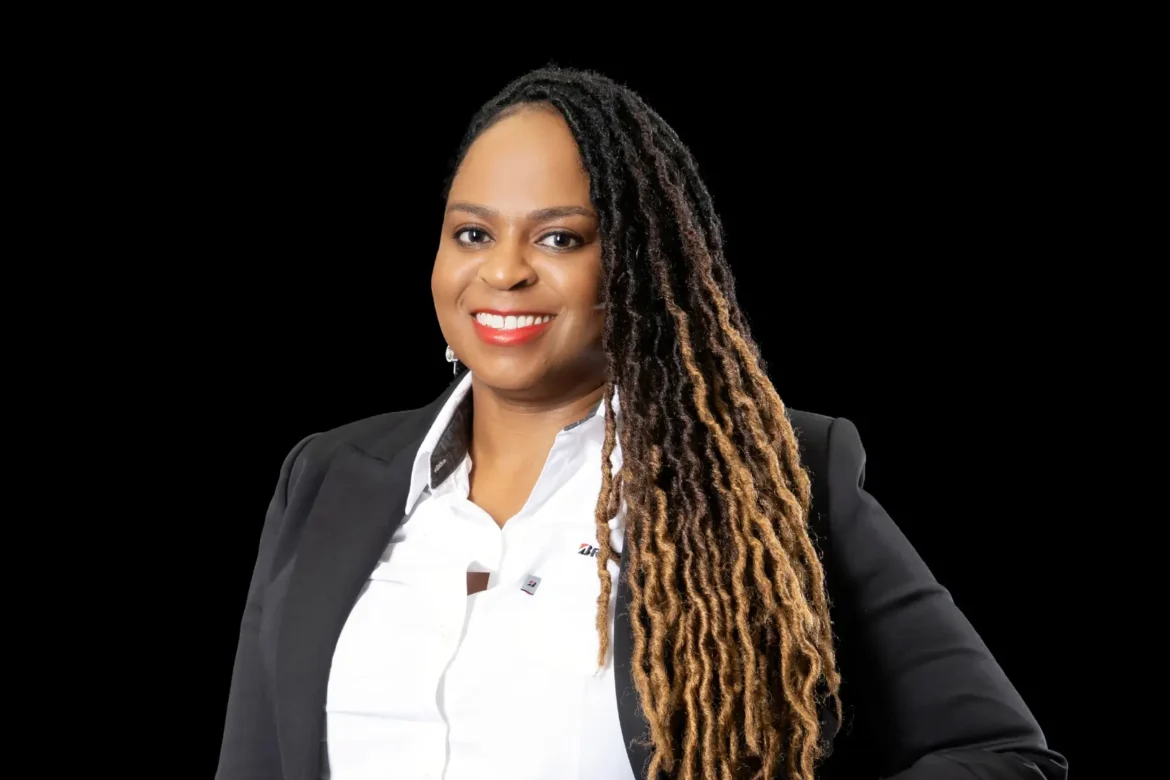
What does it take to move from knowing what the law says to helping a business decide what to do? For Scarlate Masiye, Director of Legal and Compliance for Africa and the Middle East at Bridgestone, the answer lies in understanding the business beyond the legal question.
With more than 15 years of experience across legal practice, consumer goods and automotive manufacturing, Masiye has seen how the role of a legal professional can extend well beyond interpreting legislation or managing risk. At its most valuable, she believes, legal leadership helps a business understand its options, make sound decisions and move forward responsibly.
It is a perspective shaped by experience, but also by a willingness to keep learning. In our conversation, Masiye reflects on what it means to influence business decisions, why women need more than a seat at the table and how leaders can use their positions to create opportunities for others.
The difference between knowing the law and understanding the business
After beginning her career in private practice at Cliffe Dekker Hofmeyr, where she progressed from candidate attorney to senior associate, Masiye, driven partly by curiosity, made the move in-house, taking up a legal role at South African Breweries.
“I wasn’t looking for an easier career, but I was looking for a more sustainable one, where I could create better integration between my work and my family life,” she says. “At the same time, I had become increasingly curious about what happened after the legal advice left our desks.”
That curiosity later led her to British American Tobacco South Africa (BAT), where she spent more than seven years in senior roles, including Legal Director and External Affairs Director for Southern Africa. Her work at BAT included the legal and regulatory aspects of the company’s acquisition of Twisp, as well as litigation relating to the 2020 tobacco sales ban.
These experiences exposed her to decisions that demanded an understanding of commercial objectives, regulatory environments, stakeholder expectations and the broader implications of a business’s choices.
“I realised quite quickly that being technically correct is only part of the job,” Masiye explains. “The real challenge is understanding the business well enough to translate the law into practical choices.”
It is a distinction that continues to shape her approach at Bridgestone, where she advises on legal, regulatory and commercial matters across Africa and the Middle East.
For Masiye, protecting an organisation and helping it grow are not competing responsibilities. The value of legal counsel lies in understanding what a business wants to achieve, identifying the risks and helping decision-makers determine how to proceed.
“The easy answer to risk is sometimes ‘no’,” she says. “But an effective legal adviser should be able to go further: ‘Here is the risk, here is why it matters, and here are the options available to us.’”
This requires trust. Leaders need to know that their advisers will be honest about the risks, even when the advice is uncomfortable, while remaining invested in helping the business succeed.
“I don’t see protecting the organisation and enabling growth as opposing objectives. Done well, they reinforce each other.”
It is a useful distinction for anyone working in a role where the responsibility to manage risk intersects with the pressure to deliver results. Expertise establishes what is possible, but understanding the wider context helps determine what is practical and responsible.
Influence means more than having a seat at the table
Masiye’s time as Legal Director and External Affairs Director at British American Tobacco South Africa gave her a broader view of the decisions businesses face. Beyond asking what the law permits, she had to consider how those decisions might affect the organisation’s reputation, its stakeholders and the trust it depends on.
“That experience broadened my understanding of risk tremendously,” she says. “It taught me that some of the most consequential business decisions sit at the intersection of law, reputation, stakeholder expectations and public trust. There is rarely a neat box around them.”
It also changed how she understood influence. “A title can give you authority over a function, but influence has to be earned beyond it.”
For Masiye, that means listening to different perspectives, communicating complex issues clearly and understanding the context in which decisions will be implemented. In her current regional role, she must account for the legal, commercial and cultural differences across Africa and the Middle East. Consistency in principles matters, but so does the flexibility to respond to local realities.
“Part of leadership is being able to absorb a lot of noise and uncertainty and create clarity for others,” she says.
The power of advocacy
That understanding of influence also shapes how Masiye thinks about women’s progression in business.
“We have made progress in getting women into the room. The next challenge is ensuring that women have a genuine voice once they are there,” she says. “Representation matters, but presence alone is not the same as influence.”
For Masiye, this means giving women access to the opportunities and networks that prepare them for senior leadership, while ensuring those already in positions of influence help others advance.
“We have to create space, sponsor talent, open doors and, importantly, leave those doors open behind us,” she says.
Masiye serves on the board of the South African Tyre Manufacturers Conference (SATMC), has judged the African Legal Awards and has been recognised on the Legal 500 GC Powerlist South Africa, including its 2026 listing. She believes that using influence to advocate for others is as important as offering guidance.
“Mentoring matters, but sponsorship matters too. Advice is valuable; advocacy can change a career.”
The courage to grow, and to make room for others
Stepping into greater responsibility rarely comes with complete certainty. Across industries and leadership roles, some of Masiye’s most significant growth has come from accepting opportunities before she felt entirely ready.
Many capable women, she observes, still feel they must have everything figured out before putting themselves forward. She recognises that instinct but encourages women not to let doubt make the decision for them.
“You do not need to know exactly how everything will work out before you take the next step,” she says. “Courage is not the absence of doubt; sometimes it is simply deciding that your potential deserves a chance despite it.”
But progression is not only about how far an individual goes. As Masiye reflects, “At some point in your career, leadership has to stop being only about how far you can go. For me, part of the privilege of leadership is recognising that somebody, somewhere, created an opportunity for you. Someone gave you a difficult assignment before you felt completely ready. Someone mentioned your name in a room you were not in. Someone saw potential that perhaps you had not yet fully recognised in yourself.”
She believes leaders have a responsibility to extend that same confidence to others. Ultimately, she hopes her own success will be measured not only by the positions she has held, but by the people who have grown because she made space for them.
“I don’t think success is simply about how high we climb. It is about who we become on the way up, and how many people find the journey a little easier because we were there.”