
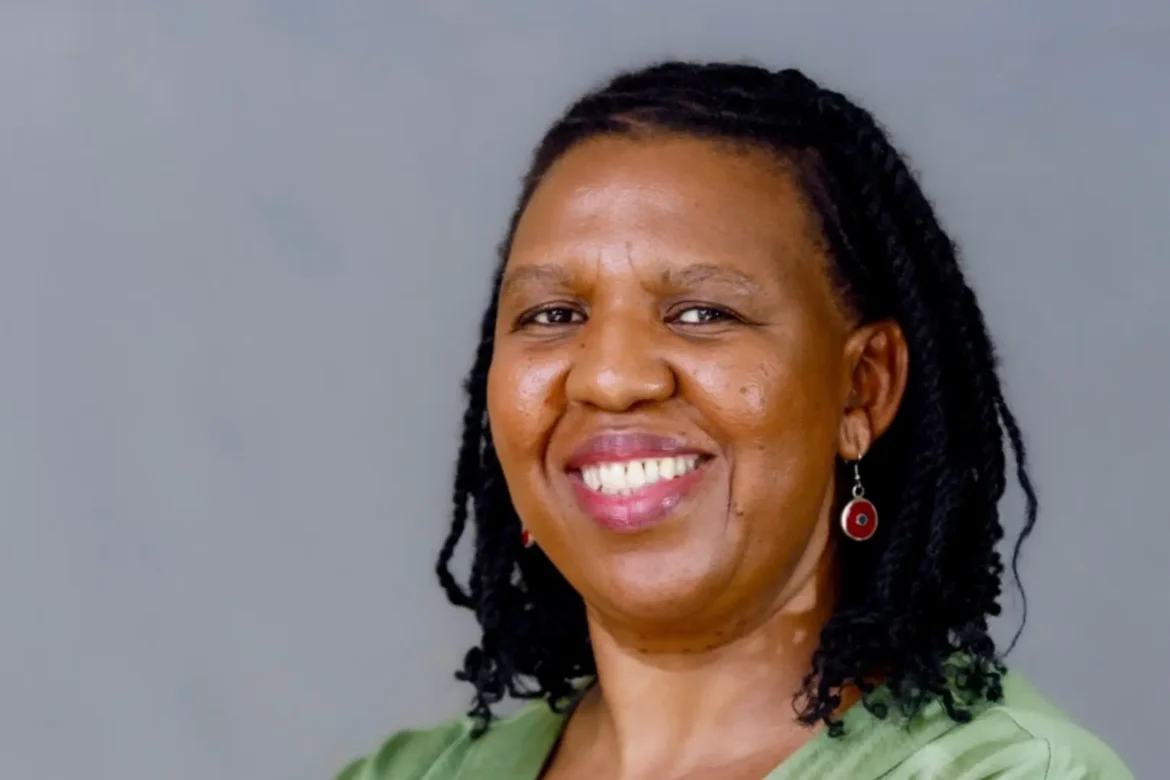
For Lorato Trok, the story of reading did not begin in a classroom. It began at home, with her mother telling her stories in Setswana.
That early experience would eventually shape a career spanning more than two decades across children’s literature, publishing, literacy and language. Today, Trok is Executive Director of Nal’ibali, South Africa’s national reading-for-enjoyment campaign, where she is leading a very different kind of literacy intervention: one that believes children need to fall in love with stories before reading can become a lifelong habit.
It is a position that brings together almost every thread of her career. Trok has worked with organisations including the Centre for the Book, Room to Read, the African Storybook Initiative and the Puku Children’s Literature Foundation. She has written children’s books and young adult biographies, worked as an editor and writing coach, advocated for African-language literature and spoken internationally about early literacy and multilingualism. She has also been recognised as one of the leading women in African publishing and the book trade.
But executive leadership has not, she says, required her to become a completely different kind of leader.
“I have spent the earlier years of my career as a community worker, literacy activist, teaching writing and writing children’s books,” she says. “I have led projects and people throughout my career, so stepping into executive leadership was another step in leading people.”
If anything, leading Nal’ibali has deepened her empathy for the people doing the work on the ground. Trok understands what it means for a community worker to enter someone’s home, earn their trust and explain why stories and reading matter. That understanding shapes the way she leads the organisation.
“Because I understand the challenges that go with this work, and the joy it brings to fieldworkers and communities, my leadership is more laissez-faire rather than a stern executive who wants things done one way and one way only.”
That proximity to communities is important because Trok does not see South Africa’s reading crisis as a problem that can be solved by schools alone.
Literacy belongs everywhere, not just in schools
The country has spent years discussing literacy outcomes, yet the problem persists. The 2023 National Reading Survey, commissioned by Nal’ibali and its partners, found that 83% of South African adults read in some way, while 78% read for enjoyment. At the same time, 63% of households had no fiction or non-fiction books and access to reading material in African languages remained a significant challenge.
For Trok, that tension tells an important story. South Africans are not necessarily resistant to reading – the system has not always given them enough reasons, resources or opportunities to enjoy it.
“We know what the issues are,” she says. “We are not closing the gap because we are only focusing on one way of doing things.”
Her answer is to broaden the idea of where literacy begins.
“Building a culture of reading does not start at school in the classroom. It starts in the mother’s womb, talking to the unborn child, at home with stories being read to and told to children in a fun way.”
By the time a child enters a classroom, she argues, they should already be carrying a relationship with stories with them.
That relationship also needs to sound and feel familiar. Trok’s own relationship with storytelling was built through the Setswana stories her mother shared with her, and she credits those stories with shaping the leader she became.
“My mother’s stories made me,” she says. “I am standing on her shoulders, as a leader in the literacy space in South Africa and the continent, all credit goes to her.”
That personal history explains why language is central to her work. When children see their homes, communities, experiences and languages reflected in books, Trok says, they see themselves validated. Stories become a mirror rather than an invitation into an unfamiliar world.
“All other children of the world are introduced to books and stories with their realities. Why must it be different for African children?”
There is something larger at stake than simply whether a child can decode a sentence.
“We lose our sense of belonging and identity if we lose our languages. Our languages are our heritage. Without them, we have no future.”
Children need stories they want to read
It is why the work of Nal’ibali extends beyond telling South Africans that reading is important. The organisation creates and distributes stories in South African languages, works with caregivers and communities, and focuses deliberately on reading for enjoyment.
“Reading should be fun!” Trok says.
That may sound simple, but it represents a significant shift in how the literacy conversation is often framed. Trok is not dismissing the importance of phonics or formal education. Rather, she argues that children need both the technical foundations of reading and the desire to keep reading once the lesson is over.
“We don’t measure how children read or count the number of words they should be reading, we want to inculcate the culture of reading through joyful and entertaining stories.”
For a country facing a persistent reading crisis, that distinction matters.
Because the consequences of failing to build strong readers extend far beyond school results. Trok sees a generation’s ability to imagine, create and participate in society at stake.
“We are looking into a country that will plunge into a disaster if we do not prioritise children’s education,” she says. “We are looking into a generation and society which will not be able to create.”
Her concern is ultimately about more than literacy statistics. If children are not given the opportunity to discover stories, develop their imaginations and read with understanding, what happens to the storytellers who come after them?
“If children are not able to read with understanding, who is going to then create stories for the generation after them?”
That question captures much of what Trok’s leadership at Nal’ibali represents. Her work is not simply about getting more children to read. It is about building an ecosystem in which children encounter books that speak to them, adults who make reading part of everyday life, communities with access to stories and languages that are treated as assets rather than obstacles.
“If we do not invest in reading, there should be nothing else to invest in as it will be a waste of time,” she says.
For Trok, that means investing in organisations and people doing the less glamorous, longer-term work of changing how children experience books.
“Someone has got to encourage reading for enjoyment and build the children’s reading abilities for school readiness, and we are that.”
Her final message to funders is therefore direct:
“Invest in us!”
It is a call for resources, but also a call to rethink what meaningful intervention looks like. South Africa does not need another generation of children simply being told that reading matters. It needs children who discover that stories belong to them.
And for Trok, that change starts where her own story did: with a child, a language they know, and someone willing to tell them a story.