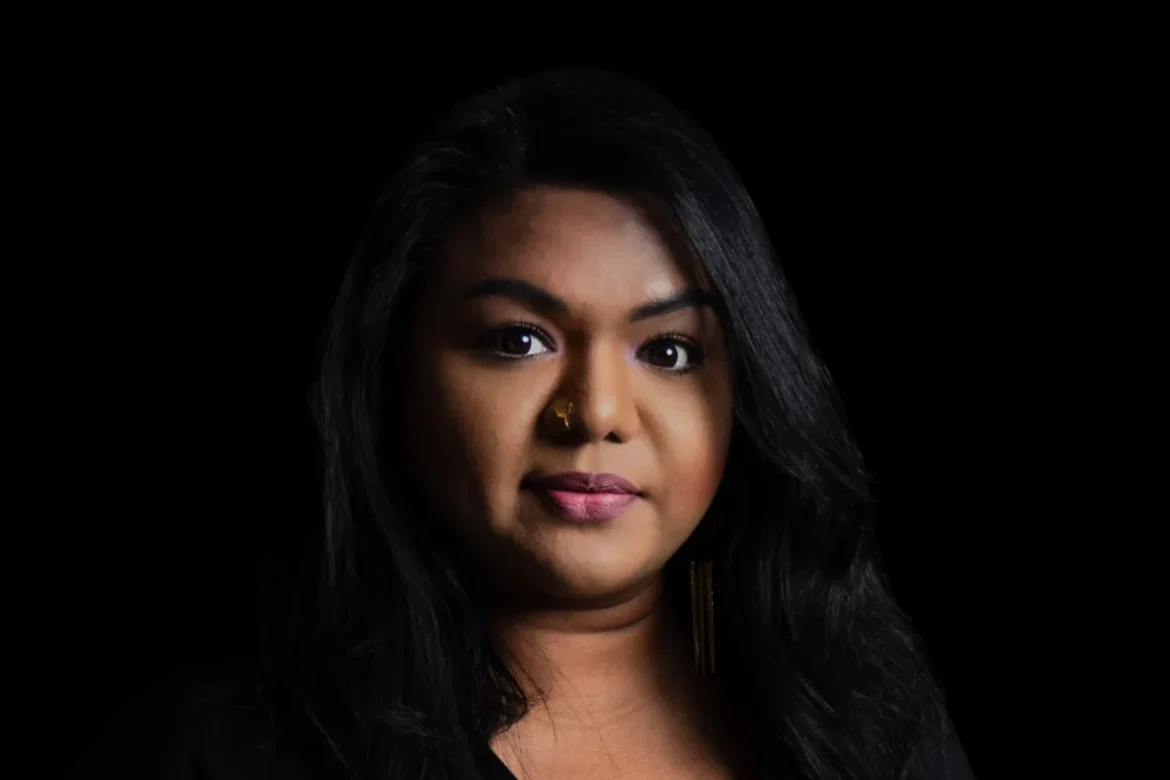

For Asima Moola, access to justice is inseparable from access to opportunity. The South African attorney, Small Claims Court Commissioner, activist and social entrepreneur has built her work around a simple conviction: people are better positioned to shape their futures when they understand their rights, have access to justice and can participate meaningfully in the economy.
Based in Empangeni, KwaZulu-Natal, Moola is the Principal of Asima Moola Incorporated, where she provides legal services across areas including wills, trusts, property, family law and civil matters. Her role as a Small Claims Court Commissioner extends that commitment beyond conventional legal practice, creating a pathway to justice for people who may not have the resources to pursue traditional litigation.
For Moola, the law is not only a profession. It is a tool for empowerment.
Her work has also earned recognition within the legal sector. She was nominated for the Women in Law Awards in both 2021 and 2022, acknowledging her contribution to the profession and her commitment to empowering women. But her influence extends well beyond the legal space.
Moola has developed a public voice around social, political and civic issues, particularly through her ability to take complicated subjects and explain them in language that ordinary citizens can understand. In a country where legal and political processes can often feel inaccessible, civic literacy has become an important part of her leadership.
She believes that an informed public is better equipped to hold institutions accountable, understand its rights and participate in shaping the society it wants to live in.
That same commitment to creating access is evident in her entrepreneurial work.
Moola is the founder of the Union Street Entrepreneurs Market and Streetspot ZA, platforms created to provide women, young people and township entrepreneurs with opportunities to trade, connect and grow. Streetspot ZA, in particular, has become a growing marketplace in the City of uMhlathuze, providing a physical platform through which emerging businesses can gain visibility and engage directly with customers.
For Moola, these markets are about much more than selling products.
They are part of a broader approach to economic empowerment that recognises that entrepreneurship requires infrastructure. A woman with a good business idea still needs somewhere to trade, customers to reach, networks to build and opportunities to turn income into sustainable growth.
By creating those spaces, Moola is addressing a different side of the access question she encounters in her legal career.
In the justice system, she works to help people understand and exercise their rights. In the marketplace, she creates opportunities for people to exercise their economic agency.
The two strands of her work are connected by her understanding of empowerment: people need both knowledge and opportunity to change their circumstances.
It is also shaping the kind of leader Moola is intentionally becoming.
She describes her leadership journey as one that sits at the intersection of law, economic empowerment, civic literacy and political accountability. Rather than viewing these areas as separate, she sees them as interconnected parts of building stronger communities.
Her next chapter is increasingly focused on institutional change and public leadership. Moola is pursuing a political role through one of South Africa’s major political parties, with an ambition to bring her legal and community experience into conversations around policy, transparency and accountable governance.
Over the next five years, she wants to see her work contribute to greater access to justice, stronger economic opportunities for women and more transparent public leadership.
The ambition is significant, but the foundation is already visible in the platforms she has built.
Through her legal practice and work as a Small Claims Court Commissioner, she is helping people navigate systems that can otherwise feel intimidating or inaccessible. Through her markets, she is creating commercial opportunities for entrepreneurs who may not have access to traditional retail spaces. Through her public advocacy, she is translating complex social and political issues into information that people can use.
For Moola, leadership is therefore not about occupying a particular room. It is about making it easier for other people to enter rooms from which they have historically been excluded.
That philosophy is particularly evident in the advice she offers other women.
She speaks about empowerment as something that must be actively built through faith, knowledge, courage and opportunity. Women, she believes, should understand their rights, use their voices and participate fully in both business and public life.
“You don’t need a man to do it,” she says.
It is a statement that captures the directness of her approach, but the deeper message is about agency. Moola wants women to understand that they can become decision-makers in their own lives and communities, whether that means understanding a legal document, starting a business, entering public leadership or simply refusing to be intimidated by systems that were not designed with them in mind.
Her own career demonstrates the possibilities created when those different forms of agency come together.
Law has given her a framework for understanding rights and accountability. Entrepreneurship has shown her the importance of creating economic opportunity. Activism has given her a platform to engage the public. And her growing interest in political leadership reflects a desire to influence the systems that determine how opportunity and resources are distributed.
Moola’s vision is ultimately one in which women are not merely included in existing structures, but have the confidence, knowledge and economic power to shape them.
“An empowered woman empowers,” she says.
It is a principle that sits at the heart of her work – and one that extends beyond individual success. When women understand their rights, participate in the economy and take their place in civic and political life, the impact can reach families, businesses and entire communities.
For Moola, the goal is not simply to build a successful legal practice or successful markets. It is to build the conditions in which more people can exercise their rights, create livelihoods and participate in the decisions that affect their lives.
Asima Moola is an honouree in the 2026 Future 54 Leading Women Cohort, recognising women shaping Africa through leadership, innovation, entrepreneurship and meaningful impact.