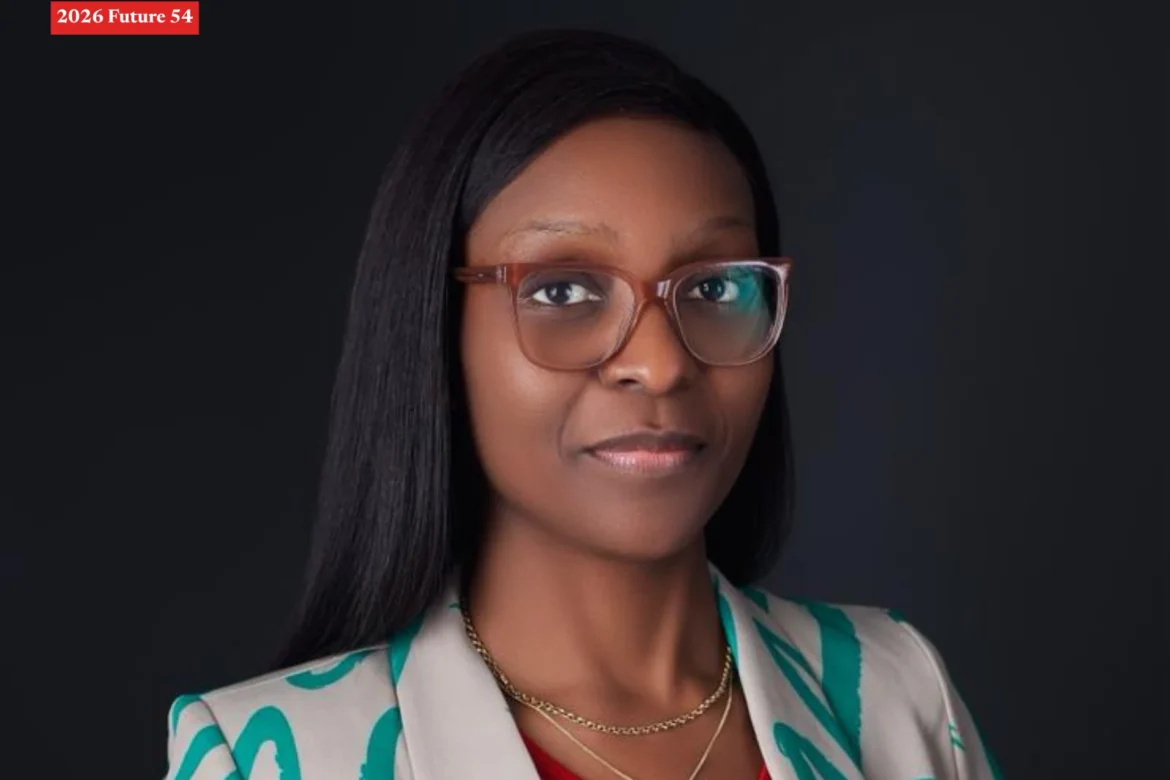
Financial inclusion is often discussed in terms of accounts opened, agents deployed or transactions processed. But for Uche Uzoebo, the bigger question is what access allows people to do once they are inside the financial system. It can mean a woman building a business, a young entrepreneur accessing opportunities or an underserved community gaining the tools to participate more fully in the economy.
That perspective has shaped more than two decades of Uzoebo’s career across banking, digital payments and financial services. Today, she is the Managing Director and CEO of Shared Agent Network Expansion Facilities Limited (SANEF), an initiative established to accelerate financial inclusion and deepen access to financial services across Nigeria.
Uzoebo joined SANEF at its inception and previously served as Chief Distribution and Stakeholder Engagement Officer, where she worked across the financial ecosystem to expand agent networks, strengthen partnerships, advance financial literacy and support technology-driven solutions. In February 2025, she was appointed MD/CEO, taking on the responsibility of leading the organisation into its next phase of growth.
It is a role that sits at the centre of some of Nigeria’s most important conversations about access. SANEF works with regulators, financial institutions, fintechs, government agencies and other stakeholders to widen financial access points and support the development of an ecosystem where formal financial services can reach people beyond traditional banking infrastructure.
For Uzoebo, that work has always been about more than infrastructure. Her expertise spans digital payments, agency banking, merchant acquiring, product and business development, corporate, commercial and retail banking, giving her a broad view of the systems required to make financial inclusion meaningful and sustainable.
That breadth is particularly important as financial services become increasingly digital. Technology can remove barriers, but it can also create new ones when people lack the knowledge, confidence or access needed to use it. Uzoebo’s work therefore places financial literacy alongside digital access, recognising that inclusion is strongest when people are equipped to make informed decisions rather than simply given entry into a system.
Her commitment to women’s economic empowerment adds another dimension to that work. Throughout her career, she has advocated for women entrepreneurs and supported initiatives focused on financial capability, access to finance and economic participation. At a 2025 Women in Finance Breakfast Forum organised by Leading Ladies Africa, she emphasised mentorship, sponsorship and the importance of women intentionally creating opportunities for other women.
That philosophy mirrors the leadership model she is consciously developing in herself. Uzoebo is less interested in being remembered solely for the results she delivers than for the people she develops along the way. As her responsibilities have grown, she has become increasingly intentional about creating environments where people can contribute their own perspectives, while maintaining the accountability and standards required for strong performance.
Listening is an important part of that evolution. She believes some of the best decisions come from making room for different viewpoints, and she is deliberately working on leading with empathy without allowing empathy to become an excuse for avoiding difficult conversations or decisions.
Her commitment to continuous learning is equally deliberate. The financial services landscape is changing rapidly, particularly as artificial intelligence, digital payments and new financial technologies reshape how products are designed and delivered. Uzoebo has responded by continuing to build her own capabilities, including professional certifications in product management and AI, while also working as a certified trainer.
That willingness to keep learning has been a constant throughout her career. Her professional credentials include Fellow of the National Institute of Credit Administration, Honorary Senior Member of the Chartered Institute of Bankers of Nigeria, Certified Product Manager and Licensed National Business Development Service Provider, alongside fellowships and memberships spanning financial services, product management, women’s leadership and business development.
The recognition that has followed her career reflects the breadth of that contribution. Uzoebo was named a Women in Fintech Powerlist Honouree in 2024 and was included in Leading Ladies Africa’s 100 Most Influential Women in Finance in 2025. In 2025, she also accepted a Financial Literacy Champion Award on behalf of SANEF at the RegTech Africa Awards, recognition she described as a testament to the organisation’s work in inclusive agent banking, partnerships and financial literacy.
Yet her ambitions extend beyond institutional milestones. Over the next five years, Uzoebo wants to see more women move from being beneficiaries of financial services to becoming active drivers of economic growth. Her vision includes women building businesses, investing, influencing decisions and occupying leadership positions where their voices can shape policies, institutions and communities.
Achieving that future will require more than expanding access points. She is investing her time in partnerships, mentoring, gender-inclusive advocacy, financial literacy and entrepreneurship initiatives that can help women turn access into economic independence. Her goal is a financial ecosystem where opportunity is influenced by potential rather than gender or geography.
Her current leadership at SANEF gives her an unusually broad platform from which to pursue that vision. In 2026, she has continued to participate in national conversations on women’s economic transformation, financial inclusion and the role of agent networks in extending services to underserved communities. She has also contributed to discussions on how agent banking could evolve into a stronger channel for credit and SME finance.
But perhaps the most revealing measure of the leader Uzoebo wants to become is not found in her professional titles. It is in the way she talks about legacy. She wants to be remembered for integrity, service, authenticity and the positive effect she had on people and institutions.
Her lesson to other women is grounded in the same philosophy: humility is not the opposite of authority. It is one of the qualities that can make authority more effective.
After years in senior leadership, Uzoebo has learned that the strongest leaders do not need to be the loudest people in the room or pretend to have every answer. They listen, remain teachable, recognise the contributions of others and create space for people around them to grow.
She also believes that people remember how they were treated long after they forget someone’s title. That is why her advice to women moving into leadership is to pursue excellence and own their place at the table without losing their humility. The higher women climb, she argues, the more important it becomes to stay grounded and bring others with them.
That principle is ultimately reflected in the future Uzoebo is trying to build. Whether through financial infrastructure, mentorship, partnerships or advocacy, her ambition is not simply to open doors. It is to help more women have the confidence, capability and economic power to walk through them.
Uche Uzoebo is an honouree in the 2026 Future 54 Leading Women Cohort, recognising women shaping Africa through leadership, innovation, entrepreneurship and meaningful impact.