
Give a girl a basketball and you give her more than a sport. You can give her a space to be visible, to build confidence, to test her abilities and, perhaps most importantly, to imagine herself as someone who belongs in spaces where decisions are made.
This is part of the thinking behind Elizabeth Waliuba’s work. A programme management specialist, youth leader and gender advocate, Waliuba is the founder and director of Imarisha Usawa, a youth-led organisation working with girls, women and young people through leadership, sport and community engagement. Its work is grounded in the belief that communities become stronger when the people most affected by inequality are given meaningful opportunities to shape the solutions.
One of the clearest expressions of that philosophy is the Usawa Festival, a platform that uses basketball, dialogue and community engagement to advance gender equality and youth empowerment. The inaugural festival, held at Kibabii University in Bungoma County in June 2025, brought together more than 150 participants over two days and connected sport with conversations around gender equality, community action and the Sustainable Development Goals.
The choice of basketball is intentional. Sport can create a different kind of environment for conversations that might otherwise feel difficult or inaccessible, while giving girls an opportunity to develop confidence and leadership in a visible way. At the Usawa Festival, participants received sports gear and training support alongside conversations about gender-based violence, inclusion and opportunity, ensuring that empowerment was not reduced to discussion alone.
Waliuba has articulated the philosophy simply: when girls are given the ball, they do not just play. They lead, inspire and transform their communities. That belief is reflected in a programme that brings together girls, athletes, community leaders, gender advocates and other stakeholders around the idea that young women should not merely be prepared to participate in society, but prepared to lead within it.
Her approach also extends beyond individual empowerment. Waliuba is interested in systems, particularly the connection between what happens in communities and what gets discussed in policy spaces. She has represented youth, girls and women at international platforms including the United Nations Commission on the Status of Women and the United Nations ECOSOC Youth Forum, bringing grassroots perspectives into conversations about sustainable development and gender equality.
That bridge between local action and global advocacy has become a defining feature of her leadership. Rather than treating international platforms as separate from community work, Waliuba uses them to elevate ideas and experiences emerging from the communities where Imarisha Usawa operates.
Her involvement in the TogetherForSDGs Global Intergenerational Hub has strengthened that focus. As part of the 2025 cohort, she helped develop Sauti Za Usawa, an intergenerational prototype using basketball to create spaces where young people and older community members can address gender-based violence and harmful norms affecting girls and young women. The model brings together youth, elders, coaches and community leaders to develop locally grounded approaches to gender equality and wellbeing.
The intergenerational element is particularly important to Waliuba’s vision. Sustainable development cannot be built by one generation acting in isolation, and the solutions that communities need often sit at the intersection of young people’s energy and older generations’ experience. Her work creates opportunities for both to contribute, learn from one another and build something neither could achieve alone.
That collaborative instinct was already evident in the SDGs Impact League, where Waliuba led a team focused on SDG 5, Gender Equality. Her team ultimately emerged as champions, with her leadership recognised across community engagement, resource mobilisation, stakeholder management, programme management, communication and servant leadership.
The recognition continued in 2025 when she was named an SDGs Impact LEAGUE Award Winner by the Global Youth Forum. But the more revealing measure of her work is what she has done with the opportunities that followed. Rather than treating recognition as an endpoint, she has continued developing platforms that allow young people to participate directly in solving the issues that affect them.
That requires a particular kind of leadership from Waliuba herself. She is intentionally working towards becoming a leader who is courageous but grounded in purpose, combining strategic thinking and policy influence with humility and empathy. As her responsibilities grow, she is also learning to delegate, trust others and build teams, recognising that sustainable change cannot depend on one person’s capacity.
Continuous learning has become part of that process. So has resilience. Waliuba sees setbacks less as evidence that an idea should be abandoned and more as opportunities to adapt, strengthen her thinking and continue moving towards the larger goal.
At the heart of that goal is a future where girls and young women have greater power to influence the decisions that affect their lives. Over the next five years, she wants to expand the Usawa Festival and establish sustainable Sauti Za Usawa intergenerational hubs that combine sport, dialogue and community action to advance gender equality, prevent gender-based violence and localise the Sustainable Development Goals.
She also wants to strengthen the pathway between grassroots action and policy influence. The intention is to create programmes that do more than deliver immediate interventions. By documenting experiences, generating evidence, building partnerships and amplifying youth voices, Waliuba wants community-led ideas to have a greater chance of influencing institutions and policies.
That ambition reflects a broader understanding of what empowerment means. It is not simply about giving young people opportunities to speak. It is about creating structures in which their voices can actually influence what happens next.
For Waliuba, that starts with owning your own voice. One of the most important lessons she has learned is that women are often conditioned to wait until they feel ready, seek permission or minimise what they have achieved. She believes the opposite is necessary: women need to recognise the value of their experiences and perspectives and claim space without waiting for someone else to validate them.
Her own career demonstrates what can happen when that principle is put into practice. She has not waited for a conventional space to appear for her work. She has helped create new ones, from basketball courts and community dialogues to intergenerational hubs and international advocacy platforms.
She wants other women to do the same. Her advice is not simply to enter existing rooms, but to recognise that sometimes the most powerful act of leadership is creating a room where a different group of people can finally be heard.
That is ultimately what Waliuba is building through Imarisha Usawa: not just programmes, but platforms for participation. And whether the setting is a basketball court in Bungoma, a community dialogue or a global policy forum, her objective remains consistent – to ensure that girls and young people are not treated as the leaders of tomorrow when they are already capable of leading today.
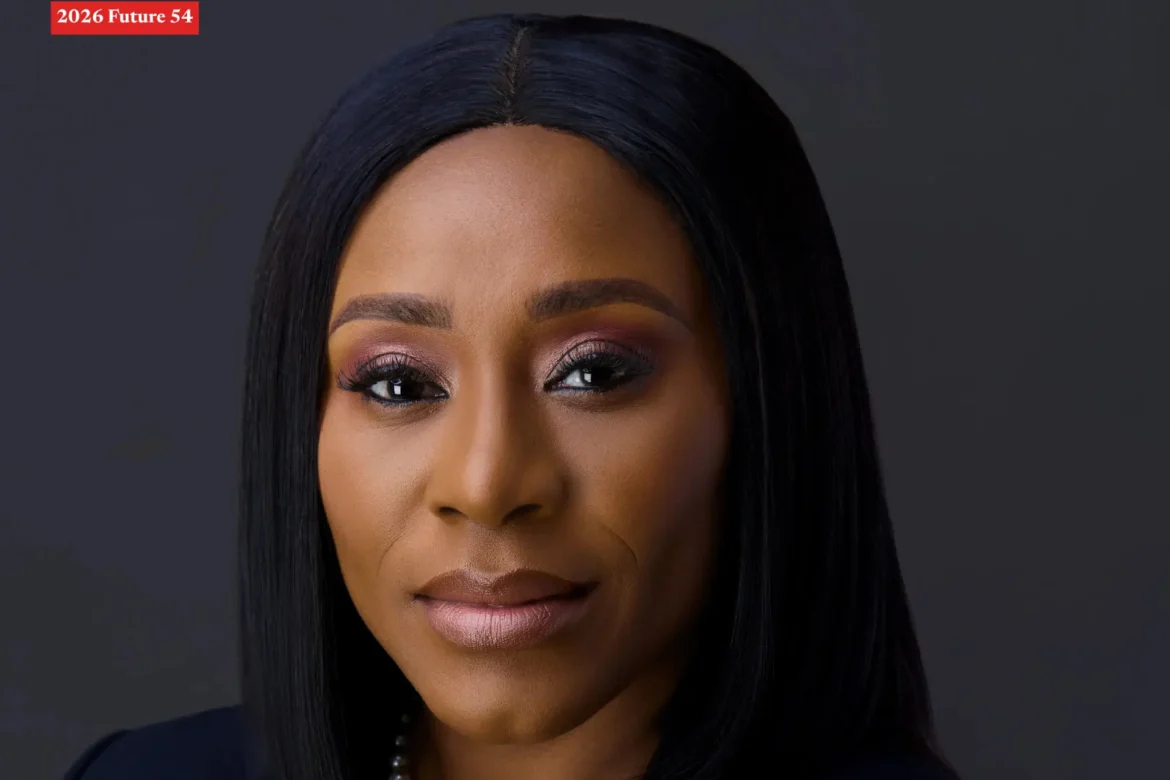
Elizabeth Waliuba is an honouree in the 2026 Future 54 Leading Women Cohort, recognising women shaping Africa through leadership, innovation, entrepreneurship and meaningful impact.